AI agents explained: the 2026 agent startup wave
AI agents plan and act on tasks instead of only answering questions. Learn what they are, the main types of agent startups, how they charge and how to judge them.
StartupsIntel team · Mar 23, 2026 · 7 min read
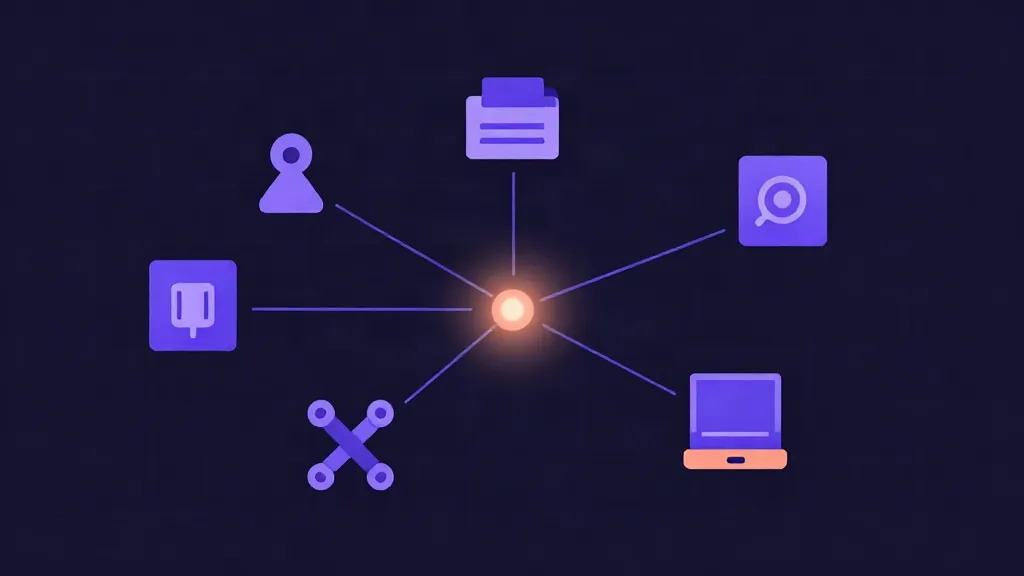
An AI agent is software that takes a goal, breaks it into steps, uses tools such as a browser, a database or an email account, and works until the task is done or it needs help. A chatbot answers a question and waits. An agent acts. In 2026 hundreds of startups are building agents, and the real question for buyers is which ones finish real work reliably.
Chatbot, assistant, agent: the difference
The words get mixed up in marketing, so here is a simple way to separate them.
- A chatbot responds to messages in a conversation.
- An assistant helps a person with tasks while the person stays in control of each step.
- An agent is given an outcome and chooses the steps itself, calling tools and checking its own progress.
The line is blurry, and many products sit between the categories. A useful test is to ask what the product does when you stop typing. If it keeps working, calls tools and returns a finished result, it behaves like an agent.
Why agents are suddenly everywhere
Three things came together. Models got better at following multi-step instructions. Tool use became standard, so models can call software through connectors. And products showed that a reliable agent could save real labor, especially in coding.
The Pragmatic Engineer 2026 survey found that 55% of its 906 respondents regularly use AI agents, with senior engineers the heaviest users. That sample leans toward early adopters, but it shows that agents moved from demo to daily tool in at least one profession.
Funding followed. Several aggregator sites report very large agent funding totals for 2026, but their figures disagree and often lack primary sources, so we do not quote them. What we can say is that agents are one of the most active areas of AI startup activity, and our AI agents directory lists many products.
The main types of agent startups
Coding agents
These agents read a codebase, change files, run tests and open pull requests. They are the most mature type, because code can be tested automatically. See our coding assistants market map for the leaders.
Customer support agents
Support agents answer tickets, look up orders and issue refunds within rules. Many price by resolution, meaning you pay only when the agent closes a ticket without a human. Self-reported resolution rates are common in marketing, so test on your own tickets.
Sales and marketing agents
These agents research leads, write outreach, run campaigns and report on results. Jasper's pricing page shows how a marketing platform now bundles agents for core workflows, with a no-code builder for custom agents on the business plan. Quality depends heavily on the data you feed them.
Back-office and operations agents
Finance, HR and IT agents handle repetitive tasks like invoice matching, onboarding checklists and access requests. These are attractive to enterprises because the work is rule-heavy and expensive. They also face the strictest security reviews.
Commerce and store agents
Shopify describes Sidekick as an assistant that has access to store data and can take actions in the admin within each staff member's permissions. That is the pattern to look for in commerce. The agent acts inside a platform that already holds the data and permissions.
Computer and browser agents
These agents operate a browser or desktop like a person would. They are flexible, since they work with any website, but slower and less reliable than agents that use direct integrations.
Voice agents
Voice agents answer phone calls, book appointments and qualify leads. They are a fast-growing branch that overlaps with the audio market. Read our post on AI voice and audio startups for more.
How agent startups make money
Agent pricing is still unsettled, and you will see four models.
- Per seat. A flat price per user, like normal software.
- Usage or credits. You pay for the compute and steps the agent uses.
- Per outcome. You pay per resolved ticket, qualified lead or completed task.
- Platform bundling. The agent is included in a larger product, as with Shopify's Sidekick being included with a Shopify plan.
Outcome pricing sounds ideal for buyers, but define "outcome" carefully in the contract. A resolved ticket that the customer reopens a day later should not count as a win.
Why many agents disappoint
Agents sound simple and are hard to run reliably. Common failure points:
- Errors compound. If each step has a small chance of failure, long tasks fail often.
- Tools break. Websites change, APIs time out and permissions expire.
- Context gets lost. Agents may forget instructions halfway through a long task.
- Costs surprise you. A loop that retries can burn through credits fast.
- Security gaps. An agent with access to email or files can be tricked by hostile text inside a document or web page.
Good agent products manage these problems with limits, logs, approval steps and clear fallbacks to a human.
A buyer checklist for agent products
Before you sign up, ask:
- What exact task does the agent finish end to end?
- What permissions does it need, and can I limit them?
- Can I see a log of every action it took?
- Where does it ask for approval before an irreversible step?
- How is pricing tied to usage, and is there a spend cap?
- What happens when it fails?
Run a two-week pilot on one narrow workflow with a clear success metric, such as tickets closed or hours saved. Compare the agent against your current process, not against a perfect one.
A founder checklist for building an agent
- Pick a workflow with a measurable result and a buyer who already pays for it.
- Start with a narrow scope and expand once reliability is proven.
- Build logs, approvals and spend limits from day one.
- Price in a way that matches the value, and test whether customers accept outcome pricing.
- Plan for platform risk. The platforms where your agent operates may ship their own.
Checking traction in the agent market
Agent startups often publish bold claims. To check whether a product is gaining attention, put its domain into the traffic checker and compare it with competitors. The revenue rankings show estimated revenue for fast-moving products, labelled as estimates. Our method multiplies visits by an assumed paying share and the lowest paid plan, so treat results as a rough guide.
Signs of a durable agent company
The agent wave will produce a few lasting companies and many that fade. When you assess one, look for these signs.
- It owns a workflow, with deep integrations that are hard to copy quickly.
- It can show real customers using the agent weekly, not just signing up.
- It measures reliability and publishes honest limits.
- Its unit economics hold up when usage grows, since agents can consume heavy compute.
- It is not a thin layer over a single model that the model provider could replicate.
Marketing demos tend to show the best case. Ask for a live trial on your own data, and ask what the agent does when it is wrong.
FAQ
What is an AI agent in simple terms?
It is software that works toward a goal on its own. It plans steps, uses tools and checks results, instead of only replying to messages.
Are AI agents ready for business use?
In narrow, well-defined tasks like coding or ticket triage, yes, with human review. For open-ended or high-risk tasks, they need strong limits and approval steps.
How do AI agent startups charge?
Common models include per-seat pricing, usage credits, per-outcome fees and bundling into a larger platform. Ask for a spend cap before you start.
How do I find alternatives to an agent product?
Open its page in our directory and use the alternatives view. Our guide on finding the best alternative to any AI tool explains the method step by step.
ai agentsagentic aiai startupsautomation